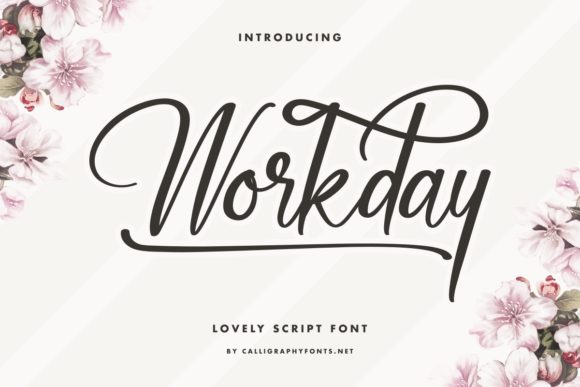
Workday: A Handwritten Font That Brings Personality to Every Design
If you're looking for a font that feels personal, warm, and expressive, Workday might just be the perfect fit. This flowing, handwritten typeface is more than just a visual choice—it's a way to add authenticity and emotion to your projects. Whether you're designing a wedding invitation or creating a logo for your small business, Workday offers a unique touch that stands out.
What Makes Workday Special?
Workday is a font that mimics the natural flow of handwriting. It’s not rigid or overly structured like many other fonts. Instead, it has a soft, organic feel that makes it ideal for designs where a human touch matters. The strokes are slightly uneven, the letters have subtle variations, and the overall look feels like it was written by hand rather than typed on a keyboard.
This quality makes Workday particularly appealing for projects that require a sense of warmth and individuality. It’s not the best choice if you’re going for a sleek, modern, or corporate look, but if you want something that feels personal and approachable, Workday could be your go-to font.
Where and When to Use Workday
Workday is most commonly used in design projects that benefit from a handwritten aesthetic. Here are some real-world situations where this font shines:
- Wedding Invitations: Couples often want their invitations to feel special and personal. Workday can help create a romantic, elegant vibe that matches the tone of the event.
- Thank You Cards: Whether you're sending a card to a friend, a client, or a colleague, Workday adds a thoughtful, heartfelt touch that printed fonts can’t match.
- Quotes and Social Media Posts: Many creators use Workday to make quotes or captions feel more authentic. It’s especially popular on platforms like Instagram or Pinterest where visual appeal matters.
- Business Cards: For entrepreneurs or small businesses, Workday can help create a memorable first impression. It’s a great alternative to standard fonts if you want to stand out.
- Logos and Branding: Some brands choose Workday to convey a sense of creativity, craftsmanship, or approachability. It works well for boutique shops, art studios, or lifestyle brands.
Who Benefits from Using Workday?
Workday isn’t just for designers. It can be useful across different professions and hobbies. Here’s how various users might find value in it:
- Entrepreneurs: If you run a small business, using Workday on your marketing materials can help build a brand that feels more personable and trustworthy.
- Bloggers and Content Creators: Adding Workday to your blog headers, social media graphics, or email newsletters can give your content a more engaging and authentic look.
- Teachers and Educators: Workday can make lesson plans, handouts, or classroom decorations feel more creative and inviting.
- Hobbyists and Artists: For those who enjoy calligraphy, scrapbooking, or DIY projects, Workday offers a versatile option that can be used in both digital and physical formats.
- Freelancers: Whether you’re a graphic designer, writer, or photographer, Workday can help your portfolio or client proposals feel more polished and unique.
Real-World Examples of Workday in Action
Let’s look at a few scenarios where Workday makes a difference:
Imagine you're planning a rustic-themed wedding. You want your invitations to reflect that cozy, down-to-earth vibe. Using Workday for the guest names and details gives the design a handmade feel that aligns with the overall theme.
Or maybe you're a small business owner selling handmade candles. Your packaging needs to feel authentic and inviting. Choosing Workday for your product labels or website copy helps reinforce the idea that your products are crafted with care.
Another example: a teacher wants to create a personalized welcome sign for her classroom. By using Workday, she can make the sign feel more welcoming and less like a generic template.
What to Consider Before Using Workday
While Workday is beautiful, it’s not always the best choice for every project. Here are a few things to keep in mind:
- Readability: Because of its flowing style, Workday may not be the best option for long blocks of text. It works well for short phrases, titles, or headings but may be harder to read in larger amounts.
- Professionalism: In some industries, such as law, finance, or corporate branding, a more traditional font might be preferred. Workday is better suited for creative, personal, or lifestyle-oriented projects.
- Availability: Make sure to check if Workday is available for the platform or software you're using. Some fonts require purchase or specific licensing, especially for commercial use.
- Consistency: If you're using Workday in a larger design project, consider how it will look alongside other fonts. Mixing too many styles can make the design feel cluttered.
How to Get Started With Workday
If you're interested in using Workday, the first step is to find a reliable source to download or purchase the font. Many design marketplaces offer it, and some websites provide free versions for personal use. Once you have the font, you can start experimenting with it in your favorite design tools—whether that’s Adobe Photoshop, Canva, or even Microsoft Word.
Before finalizing any project, test Workday in different sizes and contexts. See how it looks on paper versus a screen, and make sure it conveys the right message for your audience. Remember, the goal is to enhance your design—not overshadow it.